Spatial Economic Compass – Heerlen
Heerlen enters a new phase of urban development. Through the Spatial Economic Compass, the city invests in a centre that is not only economically resilient, but also greener, more attractive, and more deeply connected to its surroundings. Building on its own identity, Heerlen is shaping an urban ecosystem where living, working, meeting, and entrepreneurship reinforce one another.
With the Spatial Economic Compass, Heerlen sets out a coherent vision for the future of its city centre, transforming it into a vibrant urban environment for residents, workers, and visitors alike. The centre is no longer approached solely as a place for retail and amenities, but as a dynamic urban milieu where living, working, education, culture, and encounter reinforce one another. By creating space for new residents, users, and forms of entrepreneurship, Heerlen fosters a climate that stimulates innovation, collaboration, and urban vitality.
In close collaboration with the municipality and local stakeholders, DELVA Landscape Architecture & Urbanism and SITE Urban Development developed a shared perspective that strengthens spatial coherence while enabling qualitative growth. Rather than a fixed masterplan or a collection of isolated projects, the compass acts as a strategic framework that guides the long-term transformation of the city centre into a driver of economic resilience, quality of life, and broad prosperity.
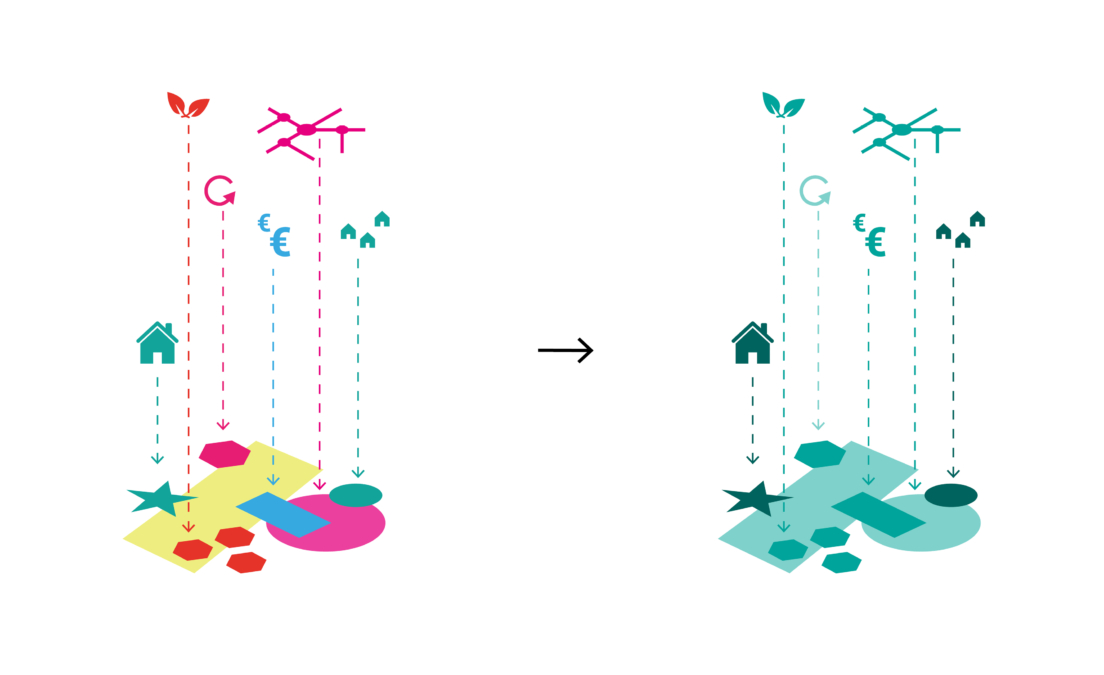
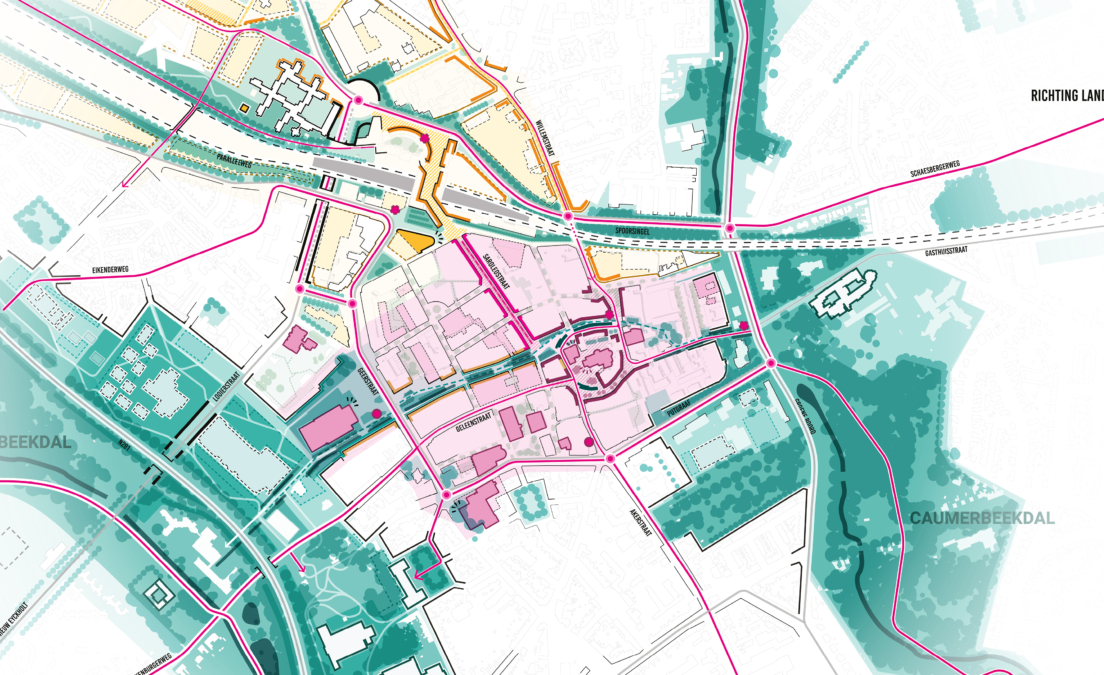
Building on its own strength
Heerlen embraces a form of growth rooted in its distinct identity. The city carries a strong urban character: raw, layered, and full of contrast. Shaped by abrupt transitions, visible traces of time, and a history of rapid growth, decline, and reinvention, Heerlen offers fertile ground for experimentation, innovation, and a contemporary pioneering spirit. Rather than a finished city, Heerlen is a place in transition, defined by its edges, its openness, and the space it still provides for change. No other city serves as a model. Heerlen itself becomes the point of reference, allowing the city to evolve in a way that is authentic to its character and clearly its own.
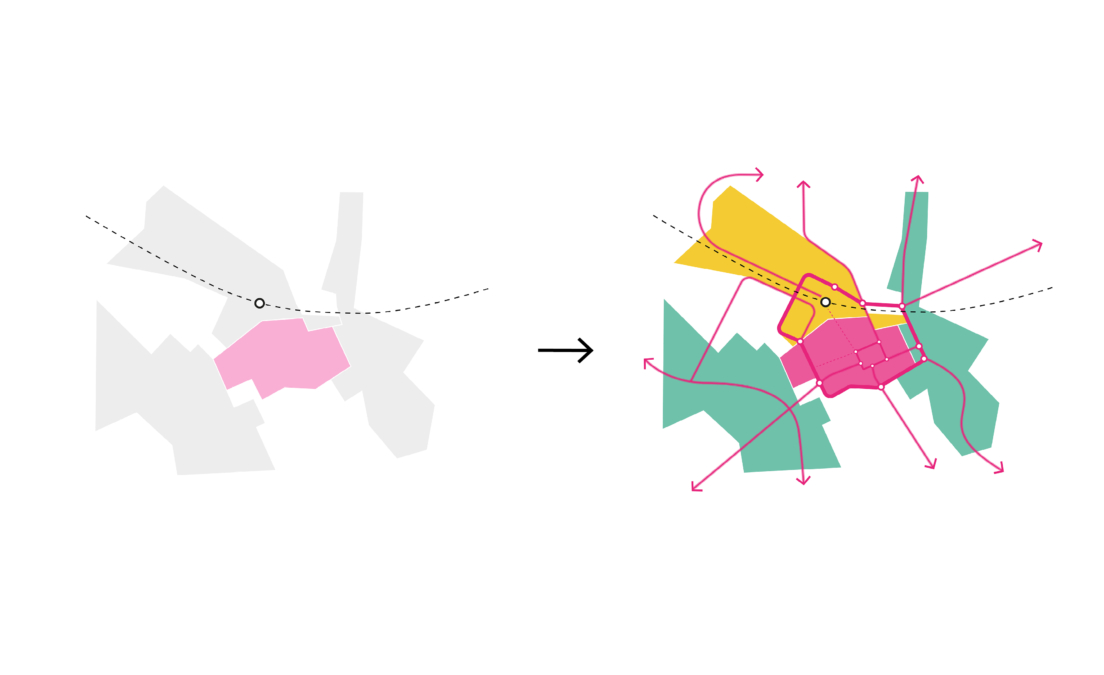
The Ex-Centric Centre
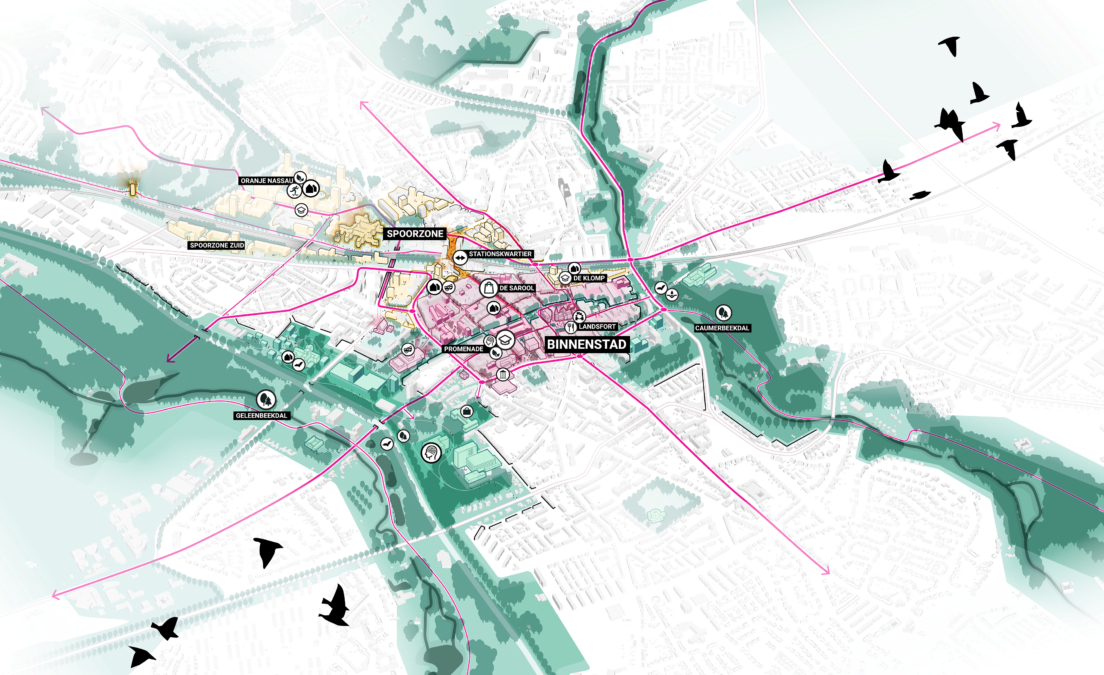
The vision for Heerlen looks beyond the traditional city centre of retail and hospitality, recognising the qualities that lie just beyond its core. The concept of the “ex-centric centre” introduces a broader urban framework in which the inner city, railway district, and stream valleys together form a connected urban ecosystem: distinct environments, each with their own character, yet mutually reinforcing. Together, these places create a resilient network that defines Heerlen’s ex-centric centre.
The inner city remains the beating heart of Heerlen, where urban diversity is strengthened and strategic programmatic choices enhance long-term resilience. A key step in the continued development of the centre is the designation of Promenade I as the preferred location for Maastricht University. The arrival of the university supports Heerlen’s ambition to evolve into a strong knowledge city, bringing new energy, activity, and exchange into the urban core. The Railway Zone builds upon the station’s strategic position as a mobility hub, creating space for densification and transformation while improving accessibility and spatial quality. Here, the rich mining heritage of Heerlen serves as an important source of inspiration for future development. At the same time, the Green Balcony reconnects the surrounding landscape with the city centre, bringing ecological quality and green space back into the heart of Heerlen. In doing so, the distinctive recreational landscape that has shaped the city once again becomes tangible and accessible within the urban core.
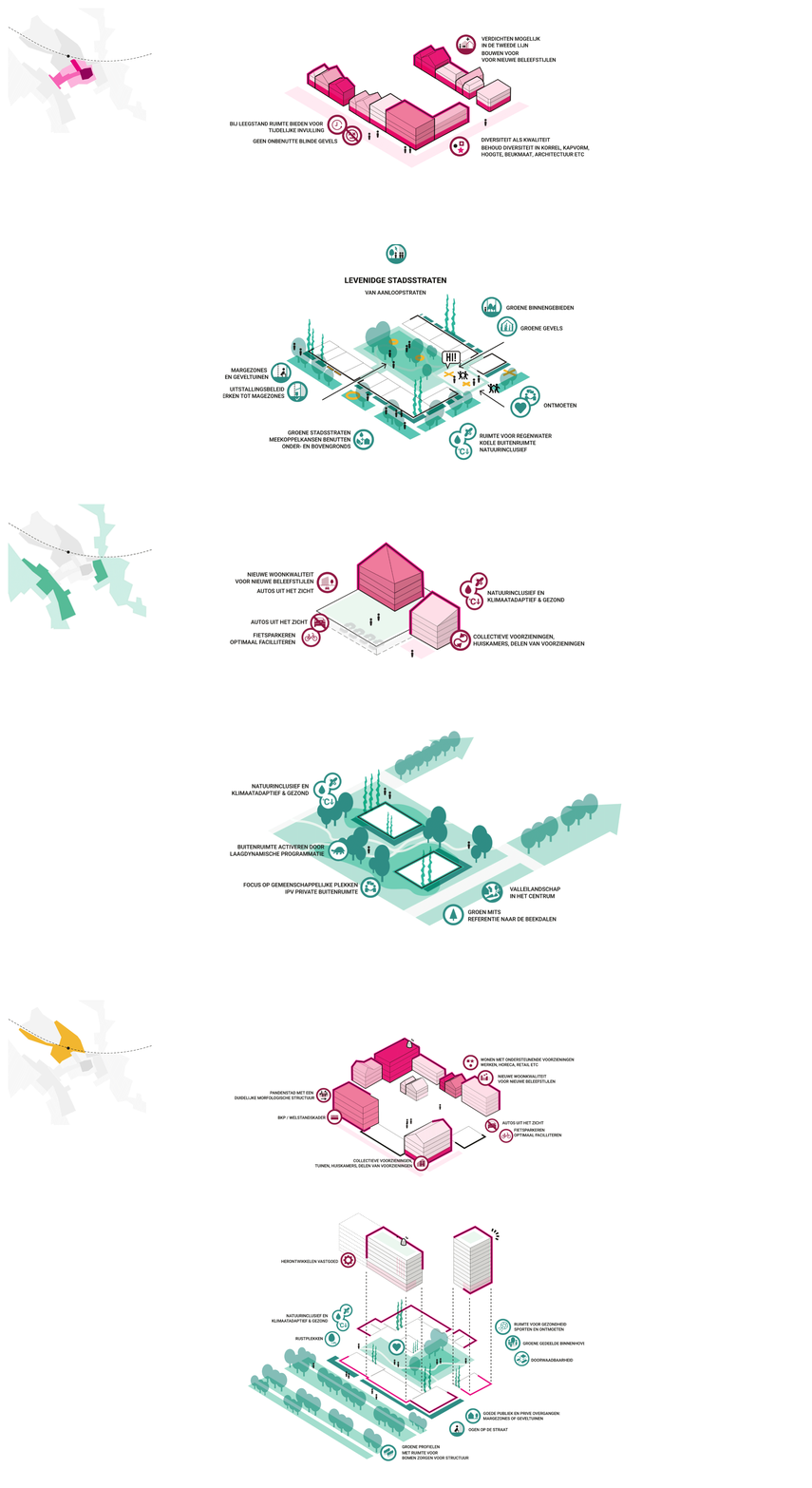
The Lifelines
The lifelines connect the different urban zones with one another, with the wider city, and with the surrounding landscape. Together, they weave the ex-centric centre into a coherent whole, ensuring that places remain accessible and interconnected. These routes are often green, activated corridors where slow mobility takes precedence. Not necessarily the fastest paths, but the most attractive and meaningful ones. Along these lines, space emerges for new programmes, encounters, and urban dynamics.

Development Strategy
The transformation of Heerlen’s city centre is a complex, long-term undertaking that requires an adaptive and realistic development strategy. Heerlen deliberately embraces an open development culture, inviting initiative from entrepreneurs, residents, institutions, and developers alike. The city offers something increasingly rare: space to experiment, to build, and to shape new forms of urban life. Those who choose to invest in Heerlen will find not only opportunity, but also a city that actively collaborates, facilitates, and grows together with its partners.
Focus on the Centre
While Heerlen contains several areas outside the centre with significant development potential, the city deliberately chooses to let these locations mature over time. To enable Heerlen’s next phase of urban growth, investment must first concentrate on the heart of the city: the inner city, the station district, and the green balconies. These areas hold the most urgent challenges and opportunities for strengthening the centre’s vitality.
At the same time, Heerlen approaches the development of surrounding areas with care and precision. By phasing growth over time, the city maintains focus and ensures that future developments can flourish at the right moment, without weakening the existing urban core.
- Location
- Heerlen
- Together with
- SiteUD en De Gemeente Heerlen