Batava Boterfabriek – Nijmegen
In the heart of Nijmegen’s Waterkwartier, the former Batava Boterfabriek is being transformed into a green residential landscape, where industrial heritage, nature, and urban living come together within a cohesive community.
The Park as a Structuring Principle
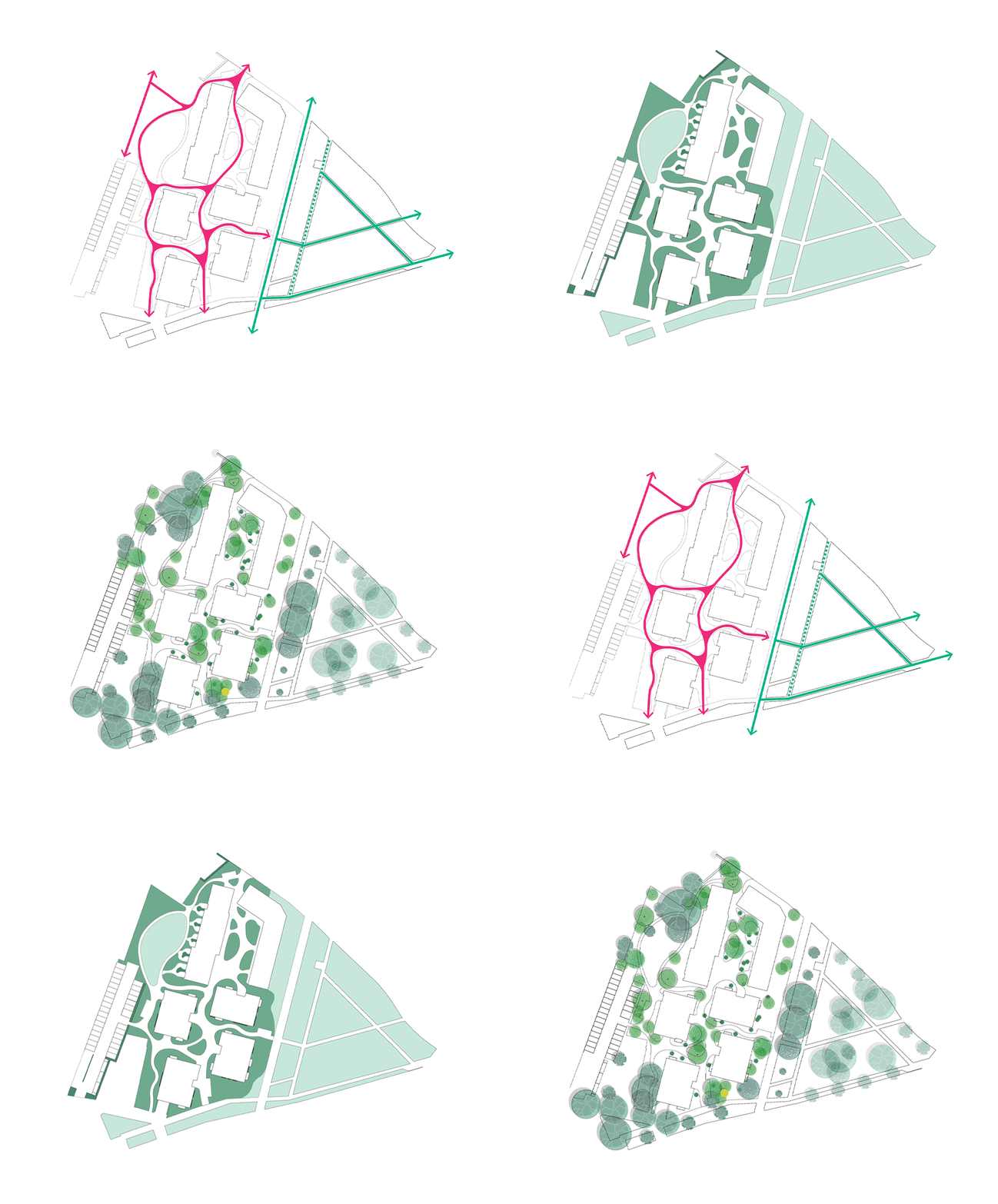
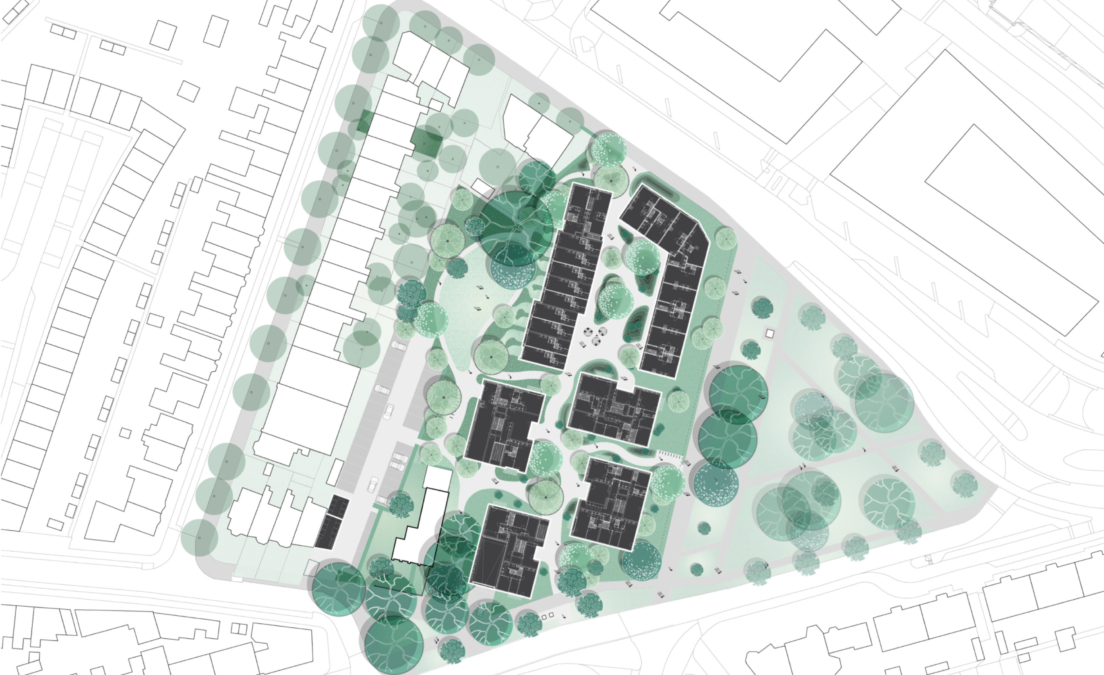
For many years, the former Batava Boterfabriek remained a hidden island between the surrounding residential neighbourhoods. The redevelopment reopens the site to the city. Rather than placing buildings at the centre of the plan, it creates a coherent park landscape that reconnects existing green structures and reanchors the site within its wider context.
The Krayenhoff Park extends into the site and, together with new green connections, forms one continuous public landscape. The result is a place defined not by its buildings, but by its landscape. Not a residential development with green spaces in between, but a park in which people live.
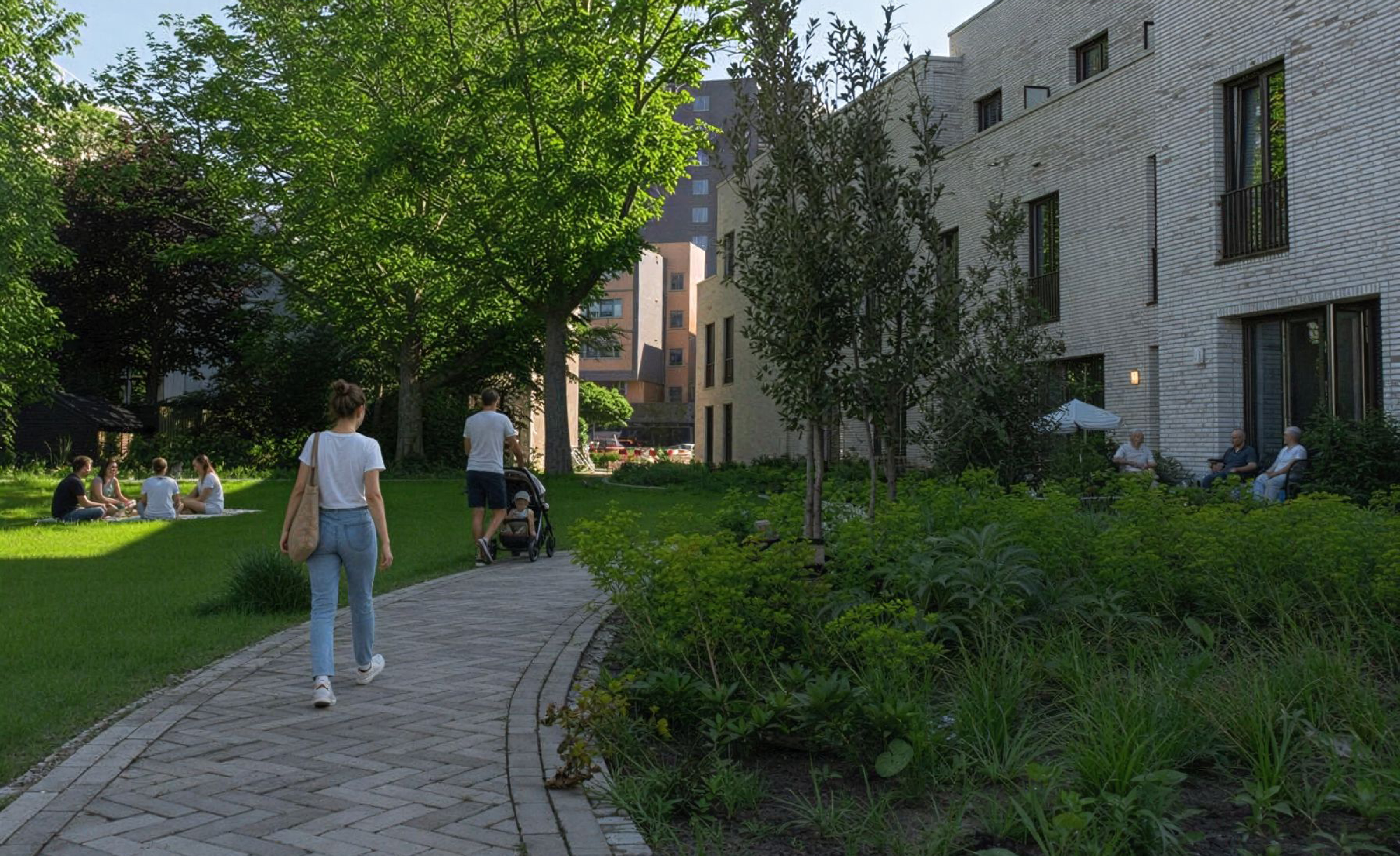
“Through the landscape, a once secluded factory site is woven back into the urban fabric.”
Reconnecting with Heritage
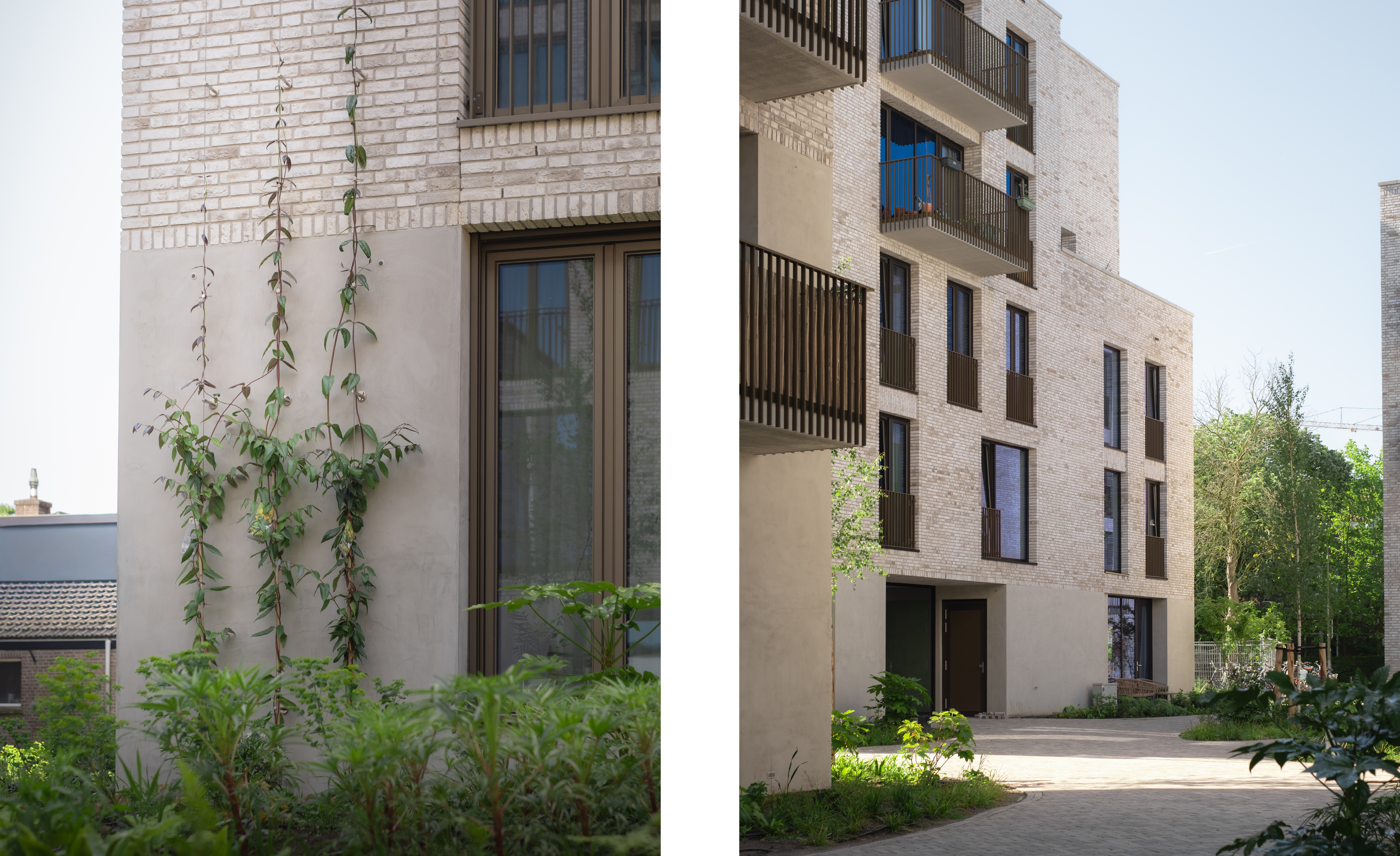
The historic Batava Boterfabriek forms the spatial and cultural anchor of the development. The industrial ensemble remains a recognisable presence and is given a new role within the park landscape.
New residential buildings respond to the scale and robustness of the historic structures without dominating them. The landscape connects old and new, making the history of the site tangible once again. In this way, the factory is not only preserved, but reactivated as an integral part of everyday life.
From Industrial Site to Living Landscape
Where the site was once characterised by logistics, hard surfaces, and enclosed spaces, a green and accessible living environment now emerges. Trees form the backbone of the plan, bringing shade, biodiversity, and a recognisable seasonal rhythm back to the site. Compact residential volumes are carefully positioned within the landscape, preserving sightlines, openness, and accessibility. Space between the buildings is dedicated to trees, social interaction, and everyday use, while existing trees are retained wherever possible and complemented by new planting that strengthens the site’s green character. Hedges, planting, and subtle changes in topography create gradual transitions between public, collective, and private spaces.
The Batava Boterfabriek demonstrates how a closed industrial site can be transformed into an accessible public place where living, heritage, and landscape are reconnected. A place where the history of the city remains visible while creating space for a new way of living in a green urban environment.
- Location
- Nijmegen
- Status
- Uitgevoerd
- Photography
- Marlies Doesburg